
How to Hike Safely in Island Heat: Start Times, Water Planning, and Shade Breaks
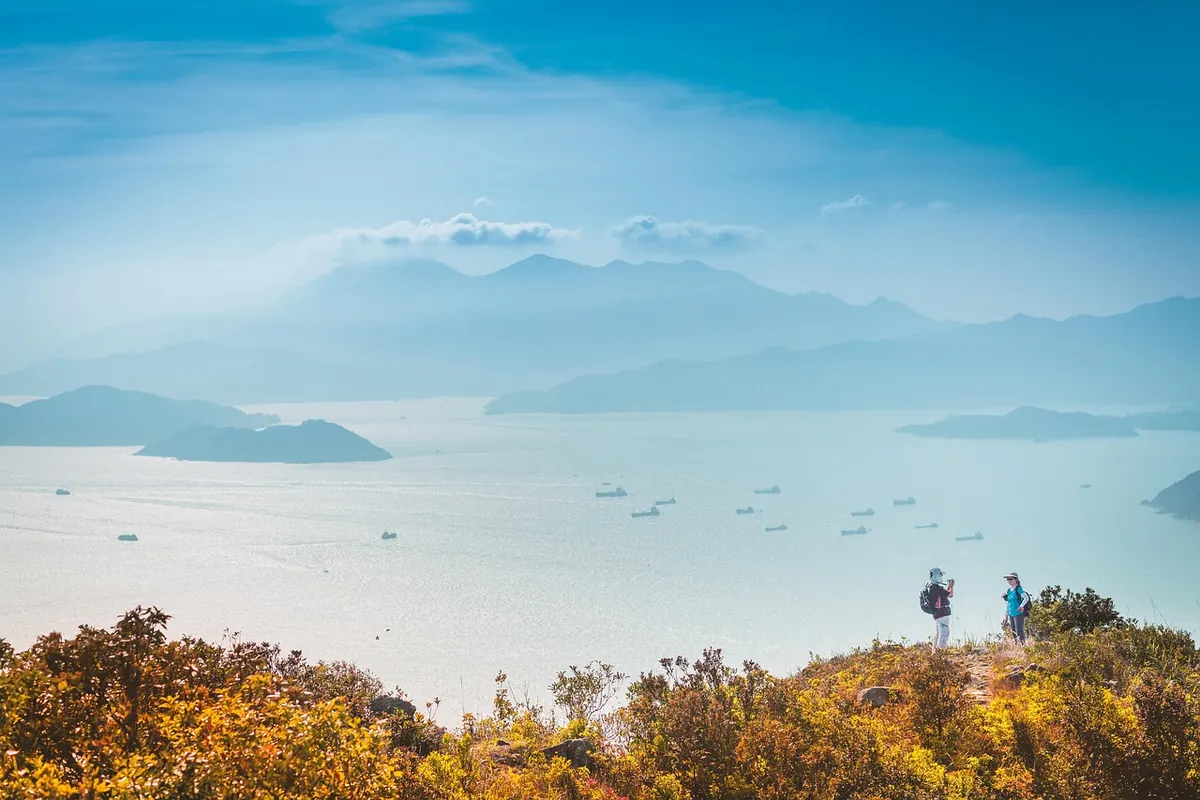
Island heat has its own character. On the mainland you can usually count on a wood, a valley, a stream. On a small island the sun comes off white limestone or pink granite, the maquis throws back a smell of resin and dust, and there is often nowhere to hide. The trail itself is rarely what gets people into trouble. The timing is.
Most heat problems on island routes begin long before anyone feels unwell. They begin with a nine o'clock start, a one-litre bottle, and a vague plan to find shade somewhere. This is about replacing those three things with decisions made the evening before.
The Clock Decides More Than the Map
Distance and elevation gain tell you how hard a route is in cool weather. On an exposed island trail they tell you very little. The same path can be a pleasure at 6:30 and a punishment at 11:00, and the difference is entirely in when you meet its worst sections.
So before you look at kilometres, find the exposed stretch. It is usually obvious on a map once you know what to look for: a ridge line with no contour detail around it, a plateau crossed by a single path, a south- or west-facing scree slope, a headland with nothing taller than knee-high scrub. Mark it. Then build the day around being there early or late, and never in the middle.
Aspect matters as much as altitude. A north-facing slope may hold shade and damp soil well into the morning while the south side of the same hill is already baking. If the route gives you a choice of approach, take the shaded one for the climb and save the sunny side for the descent.
Start Times: Two Good Windows and One to Avoid
The pre-dawn start
This is the reliable one. Alarm at five, boots on by half past, headlamp for the first twenty minutes. You get cool rock underfoot, air that hasn't heated yet, spiders' webs strung across the path, and the first light arriving over the water while you're already climbing. You also get the hard part finished before the day turns.
Two practical notes. Check in advance that you can actually reach the trailhead at that hour — some island access roads sit behind gates that open later, and a locked barrier at six in the morning ruins the plan. And eat something, even if you don't want it. A body that starts a hot climb empty runs out of patience quickly.
The late-afternoon window
The second-best option, starting around 16:30 or 17:00. It works, with two caveats. Stone and dry earth hold heat and keep radiating it long after the air has cooled, so the first hour can still feel fierce. And shade arrives earlier than you expect on the eastern side of a ridge. Take a headlamp even for a short route, and give yourself a firm turn-around time rather than a target summit.
The window to avoid
Roughly 10:30 to 15:30 on exposed ground in high summer. If your route can't avoid that block, it isn't a route for that day. Choose a shaded valley walk, a short coastal path, or nothing at all. Sitting out the middle hours is not a failure of ambition; it's what people who live on these islands do.
Water Planning You Can Trust
Water is where good intentions quietly fall apart. People carry what feels like plenty and drink it in the first two hours, or carry a quantity worked out for a cool morning in April.
- Start with a working figure, not a guess. Around half a litre per person per hour of walking is a sensible starting point in strong heat, and it needs raising for long climbs, full sun, or if you sweat heavily.
- Add an untouched reserve. Keep at least a full litre sealed at the bottom of the pack. It is for the wrong turn, the slow descent, the injured ankle.
- Count the return leg. Most people plan for the way out and forget that the way back is often the hotter half.
- Include the waiting time. A bus that doesn't come, a ferry delayed, a lift that leaves you standing in the sun. You drink while stationary too.
- Don't count on springs. Island springs marked on maps are seasonal and many run dry by early summer. A trickle in a shaded gully may keep a goat alive and still be useless to you.
Carry it so you'll actually drink it
People drink less from a three-litre bottle buried in the pack than from a small bottle in a side pocket they can reach while walking. Two soft flasks in easy reach beat one heavy container you have to stop and unpack for.
On long hot days, plain water alone isn't always enough. A salty snack, a few olives, bread with something savoury on it, or electrolyte tablets if you normally use them will do more for you than another litre of water. The night before matters too: drink properly, go easy on the wine, and treat pale urine in the morning as a crude but useful green light.
Shade Breaks Are Part of the Route
Improvised shade is the trap. By the time you want it, you're usually on the most exposed part of the trail with nothing in sight. Plan breaks the way you plan water: as fixed points with times attached.
A workable rhythm in full sun is ten minutes of shade every hour to ninety minutes, taken before you feel you need it. Around midday, stretch that to half an hour. Sit down, take your boots off, put your hat aside, drink, and eat something small. Sit on a foam mat or your pack rather than directly on ground that has been in the sun since eight.
Shade shifts through the day, and reading it is a small skill worth learning. A dry stone wall gives shade on its north side in the morning and its east side in the afternoon. Dense holm oak is better than sparse pine, which filters light without blocking it. The lee of a boulder can be enough: a patch the size of a doorway that covers your head and shoulders is worth more than nothing. Chapels, shepherds' huts and abandoned barns are gifts. So are deep erosion gullies, which stay cool and often hold a little moisture.
Don't sit until you're cold, though. Long stops in air conditioning or sea wind leave stiff legs and a slower second half. Ten focused minutes beats forty aimless ones.
Reading the Warning Signs Early
Heat problems build in stages, and the early ones are easy to explain away. Thirst, a dull headache, dark urine, feeling vaguely irritable or flat. Then dizziness on standing, nausea, cramps, and the odd sensation of having stopped sweating while everyone else is soaked.
If any of that appears: stop, get into shade, drink, wet a cloth or a shirt and put it on your neck and wrists, and start heading down. Confusion, stumbling, or collapse is a different category — cool the person aggressively, get help, and do not leave them alone while you walk out.
None of this is medical advice, and it isn't meant to be. If you take medication that affects hydration or sun sensitivity, or you have a heart or kidney condition, ask a doctor how to handle a hot hike before you go. It's a five-minute conversation that changes how you plan.
A Hot-Day Plan You Can Copy
Here is what a realistic exposed island walk looks like in July, in the shape you can adapt to almost any route.
- The evening before: check the exposed section on the map, fill and count the bottles, pack a headlamp, a wide hat, a wet-able cloth and something salty.
- 05:00 alarm. Drink a full glass before you leave the house.
- 06:00 on the trail, cool and quiet, moving steadily without pushing.
- 08:00 first short shade stop, ten minutes, even if you feel fine.
- 09:30 the exposed ridge or plateau, crossed and behind you.
- 11:00 summit or high point, then down the shaded side.
- 12:30 a proper break of half an hour in real shade, boots off, food eaten.
- 14:00 back at the trailhead, with water still in the pack.
That last line is the test. If you finish with an unopened reserve and a clear head, you planned the day well. If you finish with an empty bottle and a headache, the route didn't beat you — the schedule did, and next time it's an earlier alarm.
Photo: GormaKuma / Pixabay